Fasting Rules

Meat allowed Meat Allowed
Fish allowed Fish Allowed
Dairy allowed Dairy Allowed
Oil allowed Oil Allowed
Wine allowed Wine Allowed

☦ Saints & Commemorations

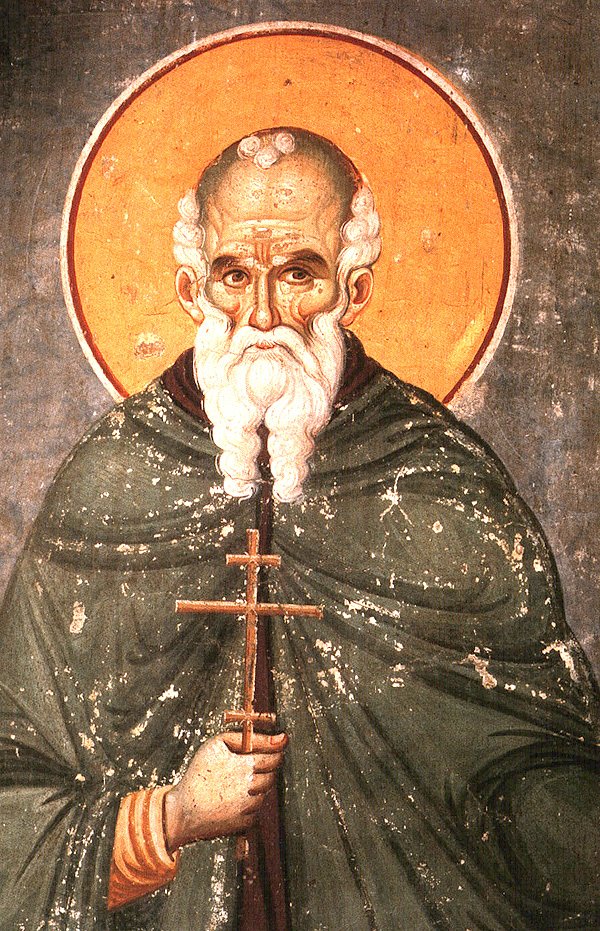
Venerable Athanasius, founder of the Great Lavra and Coenobitic Monasticism on Mount Athos, and his six disciples

Venerable Athanasius, founder of the Great Lavra and Coenobitic Monasticism on Mount Athos, and his six disciples

Born in Trebizond, he was educated in Constantinople, then entered into ascetic life. Seeking greater reclusion, he went to the Holy Mountain to live in silence. But many others gathered around him, and in time he was forced to build the monastery known as the Great Lavra. As construction was being planned, he beheld the Mother of God, who miraculously brought forth water from a rock near the site, and promised him that she would be the abbess of his monastery. Born in Trebizond, he was educated in Constantinople, then entered into ascetic life. Seeking greater reclusion, he went to the Holy Mountain to live in silence. But many others gathered around him, and in time he was forced to build the monastery known as the Great Lavra. As construction was being planned, he beheld the Mother of God, who miraculously brought forth water from a rock near the site, and promised him that she would be the abbess of his monastery. He died when the newly-constructed dome of the monastery collapsed while he and six of his brethren were working on it.

Unc. Rel. Ven. Sergius of Radonezh; Ven. Athanasius of Athos
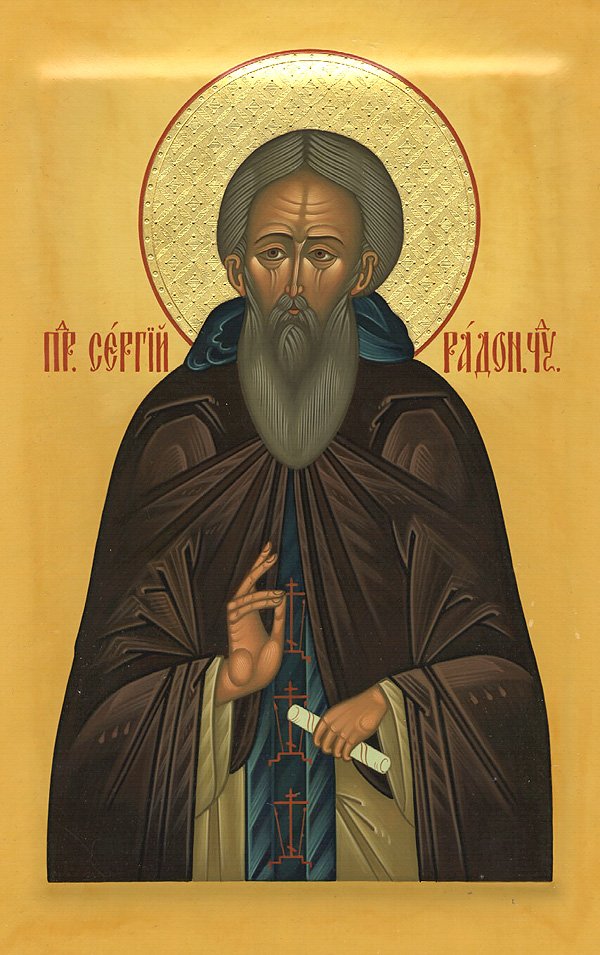
Uncovering of the relics of Venerable Sergius of Radonezh

Uncovering of the relics of Venerable Sergius of Radonezh

For his life, see September 25.

Troparion - Tone 8

From your youth you received Christ into your soul, O venerable one, / and above all desired to leave behind the turmoil of the world. / You courageously settled in the wilderness, where you raised children in obedience, the fruits of humility. / Thus, as an abode of the Trinity, you enlightened all who approached in faith and granted healing to all. / Our Father Sergius, pray to Christ God that our souls may be saved.

Kontakion - Tone 8

Having risen from the earth today and shining like the sun, / your precious and incorrupt relics are as fragrant flowers, scented with miracles, / granting healing to all the faithful, and making glad your flock which you wisely gathered and tended. / Now as you stand before the throne of the Trinity, entreat God’s help and grace for them and for all Orthodox Christians, / so that we may sing: “Rejoice, divinely-wise Sergius.”

Martyrdom of St Elizabeth Romanov and Nun Barbara (1918)

Grand Duchess Elizabeth was a grand-daughter of Queen Victoria of England and the older sister of the Empress Alexandra (July 4). After marrying Grand Duke Sergei she converted to the Orthodox faith, though this was not required by her position. After her husband was assassinated in 1905, she took monastic vows and withdrew from the world, founding the Convent of Saints Mary and Martha. Grand Duchess Elizabeth was a grand-daughter of Queen Victoria of England and the older sister of the Empress Alexandra (July 4). After marrying Grand Duke Sergei she converted to the Orthodox faith, though this was not required by her position. After her husband was assassinated in 1905, she took monastic vows and withdrew from the world, founding the Convent of Saints Mary and Martha. There she served as superior, devoting her time to prayer, fasting, and caring for the sick and the poor. During the Russian Revolution, she was seized by the God-hating Bolsheviks and taken to the Urals, where she and several with her were martyred by being thrown alive down an abandoned mine-shaft. When the fall did not kill them, soldiers threw grenades down the shaft to complete their work. Saint Elizabeth was singing the Cherubic Hymn when she died. The Nun Barbara, her cell-attendant, voluntarily followed St Elizabeth into exile and received martyrdom with her. Their relics were recovered and taken at great risk to China, then to Jerusalem, where they were deposited in the Convent of St Mary Magdalene. When their reliquaries were opened in 1981, their bodies were found to be partly incorrupt, and gave off a sweet fragrance. Footnote: After the assassination of her husband in Moscow, Grand Duchess Elizabeth had a cross erected at the site of his death, bearing the inscription “Father, forgive them, for they know not what they do.” After the revolution, the cross remained standing through the devotion of the people of Moscow to St Elizabeth, until it was personally torn down by Lenin.

Righteous Father Lampadus the Wonderworker

Our Holy Father the New Martyr Cyprian (1679)

“Born in the village of Klitzos in Epirus, Cyprian went off to the Holy Mountain after the death of his devout parents. He became a monk there and gave himself to asceticism in a cell near the monastery of Koutloumousiou. He heaped labour upon labour on himself, asceticism upon asceticism, until he came to be known and respected all over the Holy Mountain. B “Born in the village of Klitzos in Epirus, Cyprian went off to the Holy Mountain after the death of his devout parents. He became a monk there and gave himself to asceticism in a cell near the monastery of Koutloumousiou. He heaped labour upon labour on himself, asceticism upon asceticism, until he came to be known and respected all over the Holy Mountain. But he was not satisfied. He was tormented by the thought that he could not be saved but by martyrdom for Christ. He therefore left the Holy Mountain and went to Salonica, appeared before the Pasha of Salonica and urged him to discard the false, Mohammedan faith and receive the true Faith of Christ. The Pasha ordered that he be whipped and driven out of the city. Dissatisfied with such little suffering for Christ, Cyprian went to Constantinople and wrote a letter to the Grand Vizier in which he set down the falseness of Mahomet and the truth of Christ the Lord. The enraged Vizier sent him to Sheik ul-Islam, and the latter heard all that Cyprian had to say, then ordered that he be beheaded. Cyprian was filled with joy beyond measure, and went to the scaffold as to his wedding. Thus this godly man suffered for Christ on July 5, 1679, and fulfilled his strong desire.” (Prologue)

Martyr Anna at Rome

No information available at this time.

Troparion - Tone 4

Your holy martyr Anna, O Lord, / through her sufferings has received an incorruptible crown from You, our God. / For having Your strength, she laid low her adversaries, / and shattered the powerless boldness of demons. / Through her intercessions, save our souls!

Martyr Cyrilla of Cyrene in Libya, a widow

No information available at this time.

Troparion - Tone 4

Your holy martyr Cyrilla, O Lord, / through her sufferings has received an incorruptible crown from You, our God. / For having Your strength, she laid low her adversaries, / and shattered the powerless boldness of demons. / Through her intercessions, save our souls!

Hieromartyr Lampados of Irenopolis

Saint Lampados was from Irenopolis in Isauria and lived during the tenth century. While he was still in the world, he shone with the Christian virtues. He was distinguished for his wisdom, his exceeding goodness, controlling his tongue, his patience, his forbearance, his gentleness, and for his great love for the poor and the suffering. Saint Lampados was from Irenopolis in Isauria and lived during the tenth century. While he was still in the world, he shone with the Christian virtues. He was distinguished for his wisdom, his exceeding goodness, controlling his tongue, his patience, his forbearance, his gentleness, and for his great love for the poor and the suffering. Later he struggled in asceticism, and he was one of those ascetics who, by their holy life and the reputation of their virtue, are also profitable for the world. Many who came to his hermitage were led by Saint Lampados to the appropriate spiritual balsam, and they recovered their moral health, which the passions and the pleasures of the flesh had destroyed. This monastic saint performed many miracles during his lifetime and after his repose.

Troparion - Tone 4

By sharing in the ways of the Apostles, / you became a successor to their throne. / Through the practice of virtue, you found the way to divine contemplation, O inspired one of God; / by teaching the word of truth without error, you defended the Faith, / even to the shedding of your blood. / Hieromartyr Lampados, entreat Christ God to save our souls.

Hieromartyr Cyprian of Mount Athos

No information available at this time.

Troparion - Tone 4

By sharing in the ways of the Apostles, / you became a successor to their throne. / Through the practice of virtue, you found the way to divine contemplation, O inspired one of God; / by teaching the word of truth without error, you defended the Faith, / even to the shedding of your blood. / Hieromartyr Cyprian, entreat Christ God to save our souls.
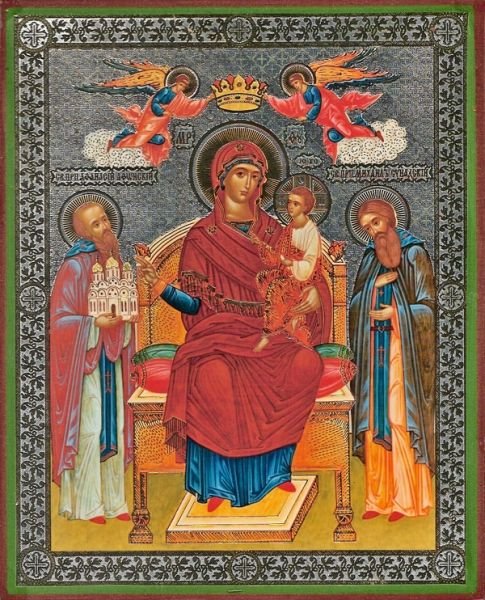
“Economissa” Icon of the Mother of God

“Economissa” Icon of the Mother of God

The Economissa (or Stewardess) Icon of the Most Holy Theotokos depicts the Mother of God seated on a throne, with Her Son on her left knee. Saint Athanasius of Mt Athos (July 5) stands on her right, holding a model of the Great Lavra. On her left is Saint Michael of Synnada (May 23). Two angels hold a crown above her head. The Economissa (or Stewardess) Icon of the Most Holy Theotokos depicts the Mother of God seated on a throne, with Her Son on her left knee. Saint Athanasius of Mt Athos (July 5) stands on her right, holding a model of the Great Lavra. On her left is Saint Michael of Synnada (May 23). Two angels hold a crown above her head. The Mother of God has been considered the Stewardess of the Holy Mountain ever since the tenth century when the Great Lavra was being built. Saint Athanasius of Mt Athos was abandoned by his monks because there was a shortage of food and money. He also left the half-built Lavra, and began walking toward Karyes, intending to ask for advice about whether or not to beg the emperor for the funds needed to complete the building. After about two hours, he saw a beautiful woman standing before him wearing a long blue veil. “I know your sorrow,” She said, “and I would like to help. Where are you going?” Saint Athanasius explained everything that had happened, and She asked, “Have you deserted your monastery for a morsel of bread? Go back! You will have everything you need in abundance, if you do not abandon your monastery.” “Who are you?” the astonished saint inquired. “I am the Mother of your Lord,” She replied. Saint Athanasius hesitated to believe Her, afraid of being deceived by the Evil One. Then he asked Her how he could be sure that Her words were true. “Do you see this rock?” she asked, pointing to the side of the path. “Strike it with your staff in the name of the Holy Trinity, and you will know who is speaking to you. Do not appoint a steward at any time, for from this time forward, I shall be the Stewardess of your monastery.” Saint Athanasius did as he was told, and the rock split open. A stream of water began to flow out of the crack. When he turned to face the Mother of God and to ask forgiveness for his doubt, She had disappeared. Returning to the monastery, Saint Athanasius found all the storerooms filled to capacity with food, wine, and oil. The building was completed, and soon the Lavra was filled with monks once again. To this day, the Lavra does not have a steward. There is, however, a monk who serves as an assistant steward to the Mother of God. The Economissa Icon rests on a throne in the narthex of the main church, and She remains the Stewardess of the Lavra. Pilgrims venerate the Icon before entering the side chapel with the saint’s tomb. The spring of Saint Athanasius still flows with healing water.

Scripture Readings

☩Epistle

Romans 10:1-10

1 Brethren, my heart’s desire and prayer to God for Israel is, that they might be saved.
2 For I bear them record that they have a zeal of God, but not according to knowledge.
3 For they being ignorant of God’s righteousness, and going about to establish their own righteousness, have not submitted themselves unto the righteousness of God.
4 For Christ is the end of the law for righteousness to every one that believeth.
5 For Moses describeth the righteousness which is of the law, That the man which doeth those things shall live by them.
6 But the righteousness which is of faith speaketh on this wise, Say not in thine heart, Who shall ascend into heaven? (that is, to bring Christ down from above:)
7 Or, Who shall descend into the deep? (that is, to bring up Christ again from the dead.)
8 But what saith it? The word is nigh thee, even in thy mouth, and in thy heart: that is, the word of faith, which we preach;
9 That if thou shalt confess with thy mouth the Lord Jesus, and shalt believe in thine heart that God hath raised him from the dead, thou shalt be saved.
10 For with the heart man believeth unto righteousness; and with the mouth confession is made unto salvation.

☩Gospel

Matthew 8:28-9:1

28 And when he was come to the other side into the country of the Gergesenes, there met him two possessed with devils, coming out of the tombs, exceeding fierce, so that no man might pass by that way.
29 And, behold, they cried out, saying, What have we to do with thee, Jesus, thou Son of God? art thou come hither to torment us before the time?
30 And there was a good way off from them an herd of many swine feeding.
31 So the devils besought him, saying, If thou cast us out, suffer us to go away into the herd of swine.
32 And he said unto them, Go. And when they were come out, they went into the herd of swine: and, behold, the whole herd of swine ran violently down a steep place into the sea, and perished in the waters.
33 And they that kept them fled, and went their ways into the city, and told every thing, and what was befallen to the possessed of the devils.
34 And, behold, the whole city came out to meet Jesus: and when they saw him, they besought him that he would depart out of their coasts.
1 And he entered into a ship, and passed over, and came into his own city.

Liturgical data sourced from OCA.org and orthocal.info